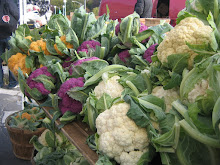
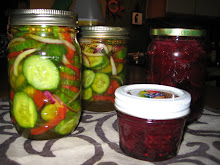
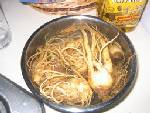
We ran into some friends of friends at the farmer's market out in the country on Saturday and invited them to brunch the next morning. Perfect time to debut a new recipe. So I picked up some beets and had a plan: adapt the recipe to use my sourdough.
Sunday, October 20, 2013
Seedy Surprise Pancakes
We ran into some friends of friends at the farmer's market out in the country on Saturday and invited them to brunch the next morning. Perfect time to debut a new recipe. So I picked up some beets and had a plan: adapt the recipe to use my sourdough.
Sunday, July 28, 2013
Pickling Berries
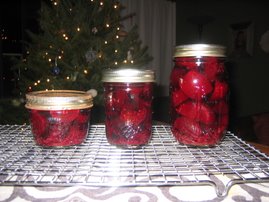
A few weeks ago, the wife of one of my softball teammates told me that she saw a recipe for pickled berries that she was interested in trying. She sent me the image of the recipe a few days later, and so when I saw these gorgeous red currants at the farmer's market this morning, I knew I had to try pickling them.

I found a Danish recipe, but it contained a preservative that I neither had nor wanted to use. And then I found an Alice Waters recipe adaptation which sounded more my style. I'm not sure yet what I'll do with them, but I have a few ideas. I could put them on a salad, serve them with some cheese and bread (Danish-style), but I'll most likely serve them alongside a venison and spaetzle.
Here's how I did it.
Pickled Red Currants
1 pint fresh red currants
1 cup champagne vinegar
1/8 cup sugar
10 each of juniper & allspice berries
1 stick of cinnamon
1 tsp pickling spices
Wash the jars out thoroughly with hot water, including the lids and place them near the stove. Wash your currants and place them carefully in the jars. Most of them will come off the stems, but leave some on the stems as they'll make a nice garnish in bunches. Chop your juniper and allspice berries on a cutting board. Add a bit of pickling spice to each jar. Bring the champagne vinegar, sugar, crushed berries, and cinnamon to a boil. (I added a dash of salt, too). Quickly pour the boiling liquid into the jars so that the berries are covered. Leave them to pickle for a few weeks before trying them in a dish.
Thursday, July 11, 2013
Of Kitchens & Meth Labs
Have you ever made freshly prepared horseradish? All you need is some horseradish root, vinegar, water, a little salt.....and a gas mask. Seriously, fresh horseradish preparation is NO JOKE. I bought two gnarly looking roots at a farmer's market in the Hamptons back in May, and they stayed dormant in a brown bag in the fridge's veggie drawer for almost a month before I had the time to prepare it. I roughly followed this recipe, but it was literally: peel the horseradish, chop it into manageable pieces, run it around in a food processor until it is broken up into small chips, and then stuff it into a glass jar. I think I stuffed it too tight because I don't think that the white vinegar I covered it with really suffused the root overnight, but people seemed to love it, so it was probably okay to pack it tight. Then you pour white vinegar over it (enough to cover it, and a little more), cover the jar, and leave it for 24 hours. Then drain the excess vinegar into a bowl, add a little bit of salt, and reserve it. Return the suffused horseradish to the food processor and process away until the pieces are pretty fine.
If you're familiar with horseradish, then you'll know what consistency you want. If you're not, they should be little tiny pieces that resemble bulghur wheat or coarse breadcrumbs. Return the horseradish pieces to the jar, and then stir in the reserved vinegar until you get a wet consistency. Cover the jar and refrigerate.
Back to the gas mask part: Seriously. This stuff is potent. If your eyes water when you peel an onion, be prepared to weep. But it's more than that. It's actually hard to breathe in a closed space with so much horseradish. Even two or three rooms away, people will be affected. It was summertime when I made this, hot in our small Brooklyn apartment, and I feel like I seriously endangered our health by not taking precautions. Hence the title of the post: you should really think of your kitchen as a kind of meth lab during this endeavor. Gloves and a little paper gas/infectious disease mask are really a must for this process. I think you can get one of those paper masks at a well-stocked pharmacy. I plan to make a lot more of this next year, and I will definitely plan in advance. Monday, March 5, 2012
Winter Slaw
My blog has been heavy on the meat and sweets lately, so I thought I'd bring it back to the roots and showcase a late-winter vegetable I found at the 5th Avenue Farmer's Market last weekend. Kohlrabi is a tuber-like vegetable that grows above-ground and is rich in vitamins and fiber and very low in calories--despite it's sweetness. There are a number of varieties, but the guy at the vegetable stand gave me a little slice of the purple kohlrabi to try, and I was sold. Kohlrabi is best to buy when the bulbs are relatively small, no more than 1 1/2 inches in diameter. They'll keep in the fridge for a week or so, but they are harder to grate the older they get.I thought it would make a nice slaw as a light accompaniment to any of the meat dishes that we've been making. This week, we're serving it alongside some buffalo meatloaf, asparagus, and winter root vegetable mash. I actually threw the stubs of the kohlrabi (the pieces that you have to give up grating or else you end up grating your fingers and knuckles) into the winter mash as it cooked so I wouldn't waste anything.
I found this recipe which I adapted to accommodate the ingredients I had in the house.
Purple Kohlrabi Winter Slaw2 medium kohlrabi, peeled, stems trimmed off, grated
2 carrots, grated
1/2 onion, grated
1/4 cup golden & black raisins
1 tbsp sugar
1 tsp salt
1 1/2 tbsp cider vinegar
4 tbsp chopped cilantro
1/4 cup mayonnaise (or more, if you prefer
Combine all ingredients in a bowl and mix well. Chill for several hours before serving.
Sunday, March 4, 2012
The Bee's Knees
Bees are essential for human life. Without bees, we would die. And without honey, we would be extremely unhappy. The honey pie is possibly the quintessential key to ultimate happiness.D and I went to our first block association meeting a few weeks ago at the corner pie shop, Four and Twenty Blackbirds. (Everyone should have a corner pie shop.) The proprietors very generously provided free pie to the group, but when we got there and looked up at the menu we saw something we couldn't pass up: salted honey pie. We weren't going to take a chance that they'd serve us the honey pie, so D went up prepared to buy a slice to share--they gave it to us on the house. It was one of those foodie moments that actually changes your life. And whenever we have that kind of experience, we leave the restaurant thinking; we've got to make this at home. Four & Twenty made this easy by graciously making their recipe for this divine pie publicly available.
For some reason, D and I started paying a lot of attention to bees. Bees became a theme in our wedding--we had little marzipan bees on our wedding cake, there were bees worked into our wedding invitation, and a friend of D's created a terrific design for wedding-themed frisbees that D gave to his ultimate frisbee friends (pictured here). We even got bee tattoos. Unfortunately, the honey bee population is in crisis and very few people seem to be paying attention. Check out this documentary, Colony, about the collapse of the honey bee population. Recently, New Yorkers won the right to keep raise bees in the city. I've thought about doing it, but haven't fully assessed whether I have the wherewithall to make that kind of commitment. There's a course offered here at the Beekeeper's Association that I'm thinking about taking.
So what do we do in the meantime? We are careful about the kind of honey we buy and we try to support local honey producers so that they remain profitable and keep doing what they're doing. There's been a raging scandal in the food community about honey that most people don't even know about: the honey that you buy at the supermarket is probably not honey at all. You can read about the scandal here, and take action by seeking out local honey producers. Because you can raise bees just about anywhere, you can even find locally-produced honey in Brooklyn!
You have to make a recipe dozens of times before you get it perfectly right, so D and I have started the process. The recipe we used calls for one ingredient that you may never have heard of, I know I hadn't: vanilla bean paste. It's a bit pricey, but you don't need a lot of it. I found it at my new favorite place, the Albany Food Co-op. Two weeks ago, on our way out to our friends' country house, we decided in the car that we wanted to try to make the honey pie for the first time, but I had left the recently-purchased vanilla bean paste at home. We were prepared to substitute extract, but were delighted to find that our friend stocked vanilla bean paste in his cupboard. (I wonder what he uses it for?) Another key ingredient is salt flakes. Maldon is the best kind of flaked salt; don't try to substitute another kind, it won't work. The last key ingredient is, of course, good honey. We went to the Hamlin Buffalo farm and picked up some locally-produced honey (and some buffalo short ribs!) and made this pie.Salted Honey Pie
(Makes one 9-inch custard pie)
Preheat oven to 350F. Have prepared one pre-baked pie shell of your choice, the recipe for the Four & Twenty Blackbird pie crust is below.
For filling
1/2 c butter melted
3/4 c white sugar
2 Tbsp white cornmeal
1/4 tsp salt
3/4 c honey
3 eggs
1/2 c cream
2 tsp white vinegar
1 tsp vanilla paste
1 or 2 Tbsp flake sea salt for finishing (Maldon is a good choice)
–
All of the mixing can be done by hand. Melt butter and combine with the sugar, salt and cornmeal to make a thick paste. Add the honey, vanilla and vinegar and mix together. Fold in the eggs, add the cream and blend. Pour the filling into a pre-baked pie shell and bake at 350 F for 45 to 60 minutes. The filling will puff up like a marshmallow and the center will be just slightly wobbly. Once cooled (at least one hour), finish with a sprinkling of flake sea salt. Slice and serve with freshly whipped cream.
Four & Twenty Blackbirds Pie CrustThis recipe makes one double crusted, 9-inch pie (you only need one crust for the honey pie--if you make both, you can freeze the other one).
2 1/2 cups all-purpose unbleached flour
1 teaspoon salt
1 tablespoon sugar
1/2 pound (2 sticks) cold unsalted butter, cut into 1/2-inch pieces
8-10 tablespoons ice water with cider vinegar, or more as needed (combine 1 cup cold water, 1/8 cup cider vinegar and ice)
Whisk the dry ingredients together and blend with a hand-held pastry blender (or a knife and fork or two forks) the chopped, cold butter, being careful not to overwork during this step. The butter should be in pea-sized chunks, not too big, but not completely incorporated. Slowly add the ice water and vinegar mixture and bring the dough completely together by hand, again being careful not to overwork. Aim to create a marbleized effect, so that the butter is still visible. Divide into 2 discs, wrap in plastic and chill 1 hour or more before use. To pre-bake a crust for a custard pie: Roll one disc of crust out to fit a 9-inch pan, about 1/4 inch thick. Place in a buttered pie pan, and crimp the edges as desired. Allow to rest and cool in freezer or fridge for at least 20 minutes. Line the rolled-out crust with tinfoil or unwaxed parchment paper, add pie weights or about a cup of dry beans if you don’t have pie weights. Distribute them evenly. Bake in a 375 F oven for 20 minutes. Allow to cool slightly before filling with custard.
Saturday, February 18, 2012
Weekend in the Country
The day after Thanksgiving, D's brother came to visit, and in return for a plate of leftovers, left us with two really nice cuts of freshly butchered venison that he had taken the last time he was out hunting around here. One of them was a loin, the other a backstrap. We prepared them both the same way--marinated in a nice olive oil, salt, pepper and some dried herbs for about a day. Then we pan-seared the meat in a skillet and finished it in a hot oven, ensuring that the meat was cooked but rare. The backstrap was a small piece of meat, but sliced thin and served with an apricot-mustard-brandy sauce alongside braised leeks and smashed sweet potatoes, it made a perfect winter meal for four.
Friday, December 30, 2011
Festivus Feast
For the past few years, I've been feeling like we need to go on a total cleanse diet after the holidays because we eat so much rich food between Halloween and the New Year. This year, we've been trying to celebrate in moderation to varying degrees of success. Kale is one of those restorative super foods (I've written about it here before), and has been looking pretty good at the farmer's markets this year. I've been trying to incorporate kale into a lot of the meals we eat for both of those reasons. Because I like to celebrate the hell out of every holiday, this is the meal we made for Festivus this year. Tofu Stir Fry with Kale & Sweet Potato
1 8 oz package of firm tofu
1 sweet potato
A bunch of kale
4 large cloves
1 onion
1/4 of a head of green cabbage
1 small zucchini
olive oil
salt & pepper
Dry and gently squeeze the water out of the tofu and cut into bite-sized cubes. In a cast-iron skillet, heat some olive oil until smoking. Saute the onion and garlic until soft; add the cabbage and sweet potato and saute until tender. Then add the zucchini and kale until just wilted. Season with salt and pepper. Remove from the pan to a bowl and set aside. Heat a bit more oil in the pan and slowly brown the tofu cubes. When they are a nice golden color, add the vegetables back to the pan and heat through. We served this over Israeli couscous tossed with scallion, and a healthy side of kimchi.
Tuesday, December 13, 2011
Sick Burger
Inspired by an episode of Diners, Drive Ins, and Dives, D and I made the sickest burger you've ever heard of. The Minotaur's Lair is a burger designed by a place called Kuma's Corner in Chicago, made with pear, onions, brie, and bacon. We used grass-fed beef from Fleischer's market in Brooklyn to make really nice meat patties, formed with some sauteed onion, garlic, salt and pepper. We grilled the burger patties on our little grill on the back porch. Then we poached and grilled some sliced pears. We served the grilled burgers on toasted ciabatta rolls with carmelized onions and brie, topped with the poached pears. Sick.
Monday, September 5, 2011
End of the Line
When he was a kid, D's dad used to bring home 20 porgies at a time after fishing off the party boats in Canarsie. It was a good way for his dad to hang out with his buddies away from the wives and bring home food for his family. Who knows if you can even bring home 20 porgies at a time anymore? We've been eating less and less fish these days because of sustainability and toxicity concerns. We've also been searching for good information about what to eat and what not to eat, like this terrific NPR story that we heard by chance a few months ago about a book called Four Fishes. Tonight, we watched the movie The End of the Line, a documentary about overfishing featuring scientists predicting the extinction of many of the tastiest species. Porgies aren't one of those endangered fish, yet, but all of the experts advise eating less fish and trying to find sources that are committed to sustainable fishing methods.
Local is usually better. With that in mind, D and I trekked to Chelsea Market to get some fish at The Lobster Place after a day at the Highline Park, a park built on an old elevated former freight line (definitely worth a visit). At $4.50 a pound, the porgy--known for its tasty & firm white meat, locally fished, and not on the "Do Not Eat" list--was the fish to pick. We had 2 porgies filleted, and D prepared them for dinner. We garnished the fish with this black salt that we picked up at Williams Sonoma. Seared Porgy with Corn & Olive Relish
1.5 lb fresh porgy, filleted
salt, pepper, olive oil
6 olives, chopped
one ear of corn, removed from the cob
small red pepper, diced
2 scallions, chopped
2 limes
1/4 stick of butter
splash of white wine
Saute in a cast iron pan the olives, corn, red pepper, and scallions in 1/4 stick of butter. Season with salt and pepper; finish with a splash of white wine and the juice of 2 limes. Season the porgy with salt and pepper and sear, skin side first, then flip to sear the other side. Pop it in the oven to finish. Serve on a bed of relish with some greens on the side (we used broccoli rabe). Enjoy!
Tuesday, August 23, 2011
Late Summer Harvest
Monday, February 21, 2011
Squid Memories
Thai Calamari with Chili
1 pound calamari (squid)
1 medium onion
1 1/2 teaspoons chopped garlic
3 fresh red chilies, seeded and chopped
3 tablespoons vegetable oil
2 tablespoons Thai fish sauce
1 tablespoon rice vinegar
2 tablespoons palm sugar or brown sugar
2 tablespoons water
1 teaspoon cornstarch
Cut the calamari into chunks; leave the tentacled ones the way they are. Slice onion from top to bottom to form curved strips. in a skillet cook onion, garlic, and chilies in oil till onion is almost tender. Add calamari and cook for a few minutes or till they curl and become tender. In a bowl stir together fish sauce, vinegar, sugar, water, and cornstarch. Add to skillet. Cook and stir till thickened and bubbly. Cook and stir 2 minutes more.
Poor Man's Fish
It's been so long since I've been to the Grand Army Plaza Farmer's Market, things have just been too busy. But yesterday, despite the violent wind, I took a walk through the neighborhood to the farmer's market with a short shopping list in mind: fresh fish, butternut squash, and kale. It's hit or miss at the fish market, and if you don't get there early, some of the fish is sold out and the line is always long. But this Saturday, I was lucky. The wind was so bitter and strong that there weren't that many people out, and instead of the regular fish stand, there was a new one with only two or three people on line. The poor woman who was staffing the table was rosy red with cold and her hands looked like they were on the verge of frostbite. I watched her "fish" out a big slab of cod and a squirmy-looking handful of calamari for the woman in front of me, and so I got the same. The cod looked beautiful--it was a thick, white, meaty 2 1/4 lbs coming in at a whopping $29, but it was Long Island line-fished, never frozen, and we hadn't eaten fish for so so long. When I brought it home, D was shocked at the price. He told me that codfish used to be known as the "poor man's fish," they used to make fish sticks out of cod. But to me, it's political. We spend too little on food in this country, and we get what we pay for. Fishing off the Long Island coast is probably no easy matter in this weather, and fishermen have to make a living (not to mention the freezing cold fish monger!) I'd rather splurge on a nice piece of cod once a month, than pick up some cheap fish every friday night from Chinatown like we used to do. God knows where that fish comes from, and you can totally tell it'd been frozen. Unfortunately, I violated the complicated fish rules in terms of sustainability. The sustainability issue, as well as the health-related issues surrounding fish, are one of the reasons we hardly eat fish anymore. I still can't quite figure out the rules, but when I consulted one of my food experts, Mark Bittman, while writing this entry, I learned that cod is overfished. : (
We found this spice mix that must have been part of a gift basket at one point, and decided we'd use it on the fish. It is amazing, just check out the ingredients: ginger, roasted garlic, sea salt, caraway seeds, sugar, roasted sesame seeds, cumin, paprika, cassia, chillies, coriander, blackpepper, turmeric, mint, nutmeg, grains of paradise, rose petals, and saffron. D loves roasted cauliflower, so we decided to use that with some sauteed spinach to accompany the fish. D's the king of fish, so he's the one who pulled this meal together. He just asked me to make a tahini sauce like the kind we get at Tanoreen. I can't compare my cooking to that of the chef at Tanoreen, but I think the sauce came out pretty well. We suspect that Tanoreen fries their cauliflower, and nothing beats the taste of fried cauliflower, no matter what the sauce.This is the recipe I used:
Tahini Lemon Sauce with Pomegranate Molasses
2 tbsp tahini
1 tbsp lebne
2 tbsp plain yogurt (low-fat, for texture)
1 tsp cumin
1 tsp salt
2 tsp minced and mashed garlic
1 tsp fresh ground black pepper
1 1/2 tbsp lemon juice
1 1/2 tsp pomegranate molasses
Combine all and stir vigorously with a fork until it's really smooth. This sauce should be poured over the cauliflower and just thick enough to stick on the vegetables; it shouldn't be the consistency of a dip or a liquid.
We sauteed small pieces of cauliflower with some salt and pepper and when it was nicely browned, it was done. We served it alongside the fish with the sauce drizzled over the cauliflower with a drizzling of additional pomegranate molasses--both for taste and for decoration.
For the cod, D marinated the fish with olive and lemon with salt and pepper, and let it sit for three hours in the fridge. When we took it out to prepare dinner, he coated it generously with the spice rub and patted it into the fish with his hands. He sauteed it on one side for three minutes, flipped it, put a handful of spinach on top, splashed it with some white wine, and some butter and covered it to let it steam for about 7 or 8 minutes at a simmer.
Wednesday, October 20, 2010
Pumpkin Muffins!
I thought a little bit of sweetness was needed in my office today, so I decided to bring in pumpkin muffins for our legal department meeting. Last weekend we went to the Harvest Festival in Red Hook, run by Added Value community farm, which works with at-risk youth to teach them urban farming and business skills. Very cool. So we picked Sophie out of the pumpkin patch and brought her home to roast.
I have a feeling that one of the secrets to this recipe adaptation is that I used freshly roasted pumpkin puree that had been seasoned with salt AND pepper. Sophie was intended for a soup, not muffins, but I had so much puree left (and still do!) that I just used the soup puree. I think they turned out really well--moist & sweet. All reports confirm my assessment so far (except that D, the real judge, hasn't tried his yet!).Pumpkin Oat Bran Muffins
2 cups all-purpose flour
1/4 cup oats
1/4 cup bran flakes
1 teaspoon baking soda
1 teaspoon baking powder
1/4 teaspoon salt
1 tsp each of cinnamon, nutmeg, allspice, and ginger
1/2 cup (1 stick) butter, melted
2 large eggs
1 cup granulated sugar
1/2 cup brown sugar
15 oz pumpkin puree
1 teaspoon vanilla extract
Preheat oven to 350 degrees. Grease and flour a 12-cup muffin tin, or line with paper baking liners. In a medium bowl, combine flour, oats, bran, baking soda, baking powder, salt, and spices. Set aside. In a large bowl, mix butter, eggs, sugars, pumpkin, and vanilla until combined. Gradually add dry ingredients to pumpkin mixture, and mix gently until smooth. Spoon batter into prepared muffin pan, filling three-fourths full. You can press a pecan into the top, or you can add 1/2 cup of chopped pecan. I kept a bunch nut-free for a colleague at work I knew would like them, but is allergic to nuts. Bake for 20-25 minutes. Cool in pan for 2 minutes. Remove to wire rack. Makes about 18 nice-sized muffins. I drizzled mine with a cinnamon-sugar glaze made with confectioner's sugar mixed with a little bit of milk and cinnamon, and then tossed some chopped pecans on top.
Wednesday, September 8, 2010
Excess Tomatoes
Tim and Peter's neighbor in the country brought them over a big bag of tomatoes from her garden. They didn't have time to use them, so they gave them to me. This is what I did with them.Fresh Tomato-Basil Sauce
3 lbs off-the-vine tomatoes
6 cloves garlic
2 medium onions
3 tbsp olive oil
salt & pepper to taste
handful of basil
Saute chopped garlic and onion in olive oil until browning and fragrant. Chop tomatoes into small cubes and add to the garlic and onions. Bring to a boil and then simmer for up to an hour as it thickens. Season it anytime you want with the salt and pepper. Add chopped basil at the end.
We served it over some angel hair pasta with more chopped basil, fresh ground pepper, and parmesan cheese.
Tuesday, July 13, 2010
Farm to Table in Boulder
D and I traveled to Boulder, Colorado for the second annual Grand Masters Ultimate Frisbee tournament. He was competing with a team from Atlanta called Ball and Chain. During my research for stuff to do on our trip, I searched for restaurants featuring locally-produced food. I was thrilled to find out that one of D's teammates has a cousin who, along with three other partners, runs Cafe Aion, a farm-to-table restaurant in the university area of Boulder and invited the team to a private dinner party at the restaurant on Sunday night after the tournament. Cafe Aion's website says it perfectly:We aspire to cultivate this tradition in our own local soil. We gather our ingredients from farmers, ranchers and fishmongers we know and admire, and we draw upon the time-honored practices of the osteria and tapas bar as we cook for our friends and neighbors.
We thoroughly enjoyed ourselves here, the decor and ambiance; the food and drink; and the professional and resposive waitstaff were all lovely.
We started by sampling some local beer, and I settled on a New Belgium Fat Tire from Fort Collins. The staff set out tasty hummous, bread, and really delicious oysters wth homemade horseradish. At the table, we found dishes of vegetable anti-pasta (green pepper, onion, and olives) and marinated lentils.
I enjoyed the way the staff did the party for us: they just sent stuff out and we didn't have to choose from the menu. I have a very hard time making restaurant decisions, particuarly with a new place, and it was nice to sample a variety of things sent from the kitchen. I read a review of the restaurant online after the meal, and I love the way the chef creates little treats for the table from kitchen leftovers: :
Dakota Soifer's chicharrones, seasoned with a dash of chile oil and salt, are crispy puffs that crack between the teeth and dissolve on the tongue almost instantly, leaving behind nothing more than the sweet smokiness of pork. They're not on the menu at Cafe Aion, but they're sent, along with other scraps-turned-tapas, to diners as thanks for their business, and as a way to use every part, even the skin, of the pig the chef buys to make sausage and ribs and pancetta.
The house-cured meats were delicious. We sampled some sausage and a pate that was served with bread and olives.
For our main courses, the kitchen staff sent out a nice paella with squid, shrimp, and chorizo. For me, the dish was a bit heavy on the rice and a touch bland--but I like fiery dishes. I might have put a dash of hot sauce on it, but I didn't ask for hot sauce and none was on the table. They also brought us plates of rare and medium-rare strips of beef, perhaps a london broil or a flank steak, with roasted vegetables. Best of all was that I recogznized the baby white turnips on the plate as those I saw on display at the farmer's market the day before. I so wanted to buy a bunch and prepare them back in our kitchen hotel, but we didn't have the time.
Dessert was a slice of fresh strawberry tart with a luscious cream base. They also brought us a plate of biscotti, iced ginger snaps, and caraway-seeded shortbread to go along with coffee or espresso.
What a wonderful find in Boulder. I definitely recommend putting Cafe Aion on your agenda if you visit the Boulder area.
Sunday, July 11, 2010
The.Best.Tomato.Soup.Ever.
A group of us went out to dinner at a place called The Kitchen, a recommendation from a friend who recently visited Boulder. The service wasn't so hot, and they had a disappointingly small number of local wines on the menus, but the food and the ambiance were outstanding. Especially good was the tomato soup that our 7-year old dinner companion ordered. You wouldn't think tomato soup would be so remarkable, but she shared it with everyone at the table and we all raved and tried to guess the secret. If you instinctively guess "butter" for the ingredient that makes everything better, you win--to my great surprise. I thought the soup was made of fresh tomatoes and olive oil, but I was totally wrong.The waiter was kind enough to ask the chef to give me the recipe.
The Kitchen's Tomato Soup
1 can quality tomatoes (the chef used organic tomatoes from California canned with basil)
2 medium onions
Cream
Butter
Salt & Peper
Sweat down the chopped onions in butter. Combine with the canned tomatoes and cook over low heat. Finish with cream and blend in a blender. Add salt and pepper to taste.
I'm looking forward to making this with both canned and fresh roasted tomatoes to see if there's a difference. I'll report back. : )
Wednesday, May 19, 2010
Potato Salad To Go!
Fresh Dill and Radish Potato Salad
6 medium potatoes (I used some butter potatoes from the farmer's market)
6 large cherry tomatoes
2 stalks of celery
4 nice sized radishes
1 scallion
2 hard boiled eggs
1/2 cucumber
2 tbsp chopped fresh dill
1 tbsp dijon mustard
1 tbsp rice wine vinegar
1 tbsp olive oil
healthy dash of salt and pepper
Make two hard boiled eggs and pop in the fridge to cool down. Boil the potatoes until tender. Drain and pop in the fridge (or freezer, depending on how quick you chop!) Chop up the vegetables. Chop the potatoes into at least six pieces each. Chop up the hard boiled eggs into small pieces, Mix the whole lot together really well. Refrigerate for at least a day.
Easy peasy.
Sunday, December 27, 2009
Coffee Marinated Bison Ribs
While visiting a friend's farmer's market in Phoenixville, PA, I found another source of grass-fed buffalo meat. It was more expensive than the farm that we visit in Hamlin, PA, but I picked up two packages of buffalo short ribs anyway (about $25). I found this recipe on the web from the February 2008 Bon Apetit and adapted it to use my slow cooker. The recipe is time consuming, but well worth it. Each portion came out to be about $7 with all the ingredients.Coffee-Marinated Bison Short Ribs
Marinade
4 cups water
3 cups chilled strong brewed coffee
1/2 cup coarse kosher salt
3 tablespoons plus 2 teaspoons (packed) dark brown sugar
1/4 cup pure maple syrup
2 tablespoons chopped fresh rosemary
2 tablespoons plus 1 teaspoon Worcestershire sauce
2 cups ice cubes
4 pounds bison (often labeled buffalo) short ribs
Short Ribs
2 cups chopped onions
1/2 cup chopped shallots
6 garlic cloves, chopped
1 small jalapeño chile, seeded, chopped
1 cup strong brewed coffee
1 cup low-salt chicken broth
1/4 cup chili sauce or ketchup
2 tablespoons Dijon mustard
2 tablespoons apple cider vinegar
1 tablespoon soy sauce
To prepare the marinade
Stir 4 cups water, coffee, 1/2 cup coarse salt, and sugar in large bowl until salt and sugar dissolve. Add syrup and next 3 ingredients; stir until ice melts. Add ribs. Place plate atop ribs to keep submerged. Cover and chill 4 to 6 hours. Drain ribs; discard marinade. Drained ribs can be made 2 days ahead. Cover and chill.
To prepare the short ribs
Heat until smoking a deep cast iron pan and add olive oil. Sprinkle ribs with salt and pepper. Working in batches, cook ribs until browned on all sides, about 7 minutes per batch. Transfer to large plate. Add onions, shallots, garlic, and jalapeño to pot. Reduce heat to medium, cover, and cook until vegetables are soft, stirring occasionally, about 10 minutes. Add coffee and broth; stir, scraping up browned bits. Add chili sauce and all remaining ingredients; bring to boil. Transfer all to a slow cooker and cook for at least 6 hours, more to taste. We like our ribs falling off the bone, so we cooked them for about 8-9 hours.
We weren't ready to eat ours right away so I put them in the freezer almost immediately after they cooled with a generous portion of the liquid they cooked in. When we were ready to eat them a few days later, I defrosted them overnight, and then when we got home from work, I put them into a foil covered pan and heated them at 400 degrees for about 45 minutes. They were delicious.
Tuesday, October 20, 2009
Wedding Favors
The only person who will truly know what I went through to create my wedding favors will be my BFF/maid of honor, and who I call my Top Chick, but for here will be referred to as M. I had 160 little jars shipped to her place because there's no room for them in my apartment in Brooklyn, and I drove myself, 75 hot peppers, and a food processor to her house this weekend to make my favors. We got up early to go to the green market near her house for 30 bell peppers (I didn't get them at home at my own green market on Saturday because I was afraid they wouldn't keep all week), ran some errands, and I got started chopping at around noon. I was committed to using local ingredients, so everything that went into these little buggers came from either my green market at Grand Army Plaza or her green market in Phoenixville, PA. I was going to use the peppers that are growing on my back balcony, but I didn't get a bumper crop this season, so I had to settle for someone else's.
I chopped half of the hot and bell peppers by hand so that the relish wouldn't be too mushy, and chopped up the other half in the food processor. I was chopping for FIVE STRAIGHT HOURS! Tomatillos go in the recipe, too, and I ran into a huge problem when the tomatillo skins got stuck in her garbage disposal unit. I had to fish around in there with my bare hands to clear it up, and even then, I had to use some Liquid Plummer. By 5:30, the relish was brining and my hands were burning like a &$((##@. I consulted an article on Chow about how to soothe burning hands after cutting chiles (Avoiding Chile Eyeball), and jumped in the car to buy some lemons, lemon juice, and yogurt.
You should have seen me at Target wheeling around a cart resting my hands on two frozen bags of edamame, and then in the parking lot pouring lemon juice over my hands.
It took me from about 8 pm until 11:30 to rinse the brine, drain the relish, wash the little jars, spoon in about 5 teaspoons into each jar, and then pour boiling hot vinegar syrup in each little jar. By the time Saturday Night Live came on, I was sitting on the floor with a glass of wine and each hand dunked into a big bowl of yogurt. Quite a sight (and very difficult to drink the wine). I was only able to do about 115--I ran out of relish. So I'll do the remaining 50 or so as sweet pepper relish this weekend. I don't think I can handle another batch of the hot anytime soon. I guess that answers my question about switching careers.
Monday, June 15, 2009
Naturally Occurring Salad Greens
Last year, my friend took me to a swanky localvore joint just North of the meatpacking district in Manhattan called The Cook Shop (http://www.cookshopny.com) and we had a purslane, goat cheese, and blueberry salad. When the waiter put the plate in front of me, I recognized the greens: I had pulled up and disposed of every single one of them from my balcony garden in Brooklyn because I wrote them off as weeds. I vowed to bring them back and cultivate them this year, and it's working. Just the other day, I was able to harvest a handful and toss them in our salad. Delicious. Check out the nutrition benefits of purslane: http://landscaping.about.com/cs/weedsdiseases/a/purslane.htm.
This experience definitely made me rethink an article that a friend wrote when we were in college called: Why is a Weed a Weed? I can't wait to have enough purslane on the porch to make my own blueberry and goat cheese salad. I'll be sure to post a photo.