Showing posts with label sourdough. Show all posts

Sunday, October 20, 2013

Seedy Surprise Pancakes

When serendipitous pancake inspiration hits,  you gotta go with it. Last week, I unearthed a bag of chia seeds from a cabinet that I'd never opened, and shortly thereafter, saw a recipe in the New York Times for Beet & Chia Pancakes. I had to do it. 

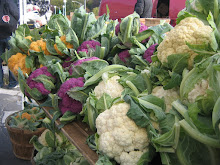
We ran into some friends of friends at the farmer's market out in the country on Saturday and invited them to brunch the next morning. Perfect time to debut a new recipe. So I picked up some beets and had a plan: adapt the recipe to use my sourdough. 


Beet 'n Chia Sourdough Pancakes 

1 large or 2 medium beets (enough for 1/2 cup puréed roasted beets)
1 cup whole wheat flour
1/2 cup white flour
2 tsp baking powder
1 tsp baking soda
1/4 tsp salt
1 tbsp honey (or sugar)
1 1/2 cups sourdough starter (or 1 cup yogurt & 1/2 cup milk)
3 tbsp chia seeds
3 tbsp olive oil 

Roast the beets (washed but skin on) in aluminum foil for an hour in a 350 degree oven. When done, puree in a food processor. Mix together all of the other ingredients and when the beet puree is cool, mix it in. Make and garnish as you would normal pancakes with butter and maple syrup.

These pancakes are utterly delicious. They make a nice surprise for guests. Don't take my word for it, though. Make them yourself! 

Monday, February 20, 2012

The Sourdough Experiments

People really appreciate freshly-baked bread. You pop a loaf in the oven before guests arrive and the smell wafting from your kitchen will make people feel as welcome as anything. I've been experimenting with sourdough recipes since I brought my first starter back from San Francisco about three years ago. I've had a very hard time finding a recipe for a nice rustic loaf, but this one is the best so far. This recipe is from the King Arthur flour website, and it worked pretty well--it yields a nice crust and a chewy center. The problem that I've had is with the rising. I don't know if its the climate or what, but I rarely ever get the nice air pockets that characterize a good sourdough. I also have a hard time getting the loaves to rise high when I made free-form loaves; my dough seems to expand lengthwise, but not rise up. This time I used additional yeast toward the end of the process, and formed a lip of aluminum foil around the dough to keep it from expanding outward. This experiment makes me think that I ought to search for some spring-form dough ring for my next loaf.

I made two loaves in preparation for weekend guests. We served the freshly-baked loaves with a dinner of pan-seared venison, leeks, and sweet potatoes. The leftovers went well with pea soup for the next day's lunch, and toasted for tuna-salad sandwiches.

Rustic Supper Sourdough

1 cup "fed" sourdough starter
1 1/2 cups lukewarm water
2 teaspoons instant yeast
1 tablespoon sugar
2 1/2 teaspoons salt
5 cups flour

Combine all of the ingredients, kneading to form a smooth dough. Allow the dough to rise, in a covered bowl, until it's doubled in size, about 90 minutes. Gently divide the dough in half; it'll deflate somewhat. Shape the dough into two oval loaves--this is where I deviated from the recipe. I sprinkled a little bit of dried yeast and stretched it through the dough, folding it over and under itself until I had two smooth loaves. Place the loaves on a lightly greased baking sheet. Cover and let rise until very puffy, about 1 hour. Towards the end of the rising time, preheat the oven to 425°F. Spray the loaves with olive oil or lukewarm water. At this point, you can also do an egg wash to make the crust shiny. I didn't do that this time around. Make two fairly deep diagonal slashes in each. Bake the bread for 25 to 30 minutes, until it's a very deep golden brown. Remove it from the oven, and cool on a rack.

Tuesday, March 22, 2011

Can't Let Organic Buttermilk Go to Waste

For this year's St. Patrick's Day soda bread, I used an outrageously expensive quart of buttermilk ($4.99). I had at least two cups of it left a few days later and didn't want to waste it. I also happened to have set aside a bowl of sourdough sponge two days ago, and it was nice and bubbly. I found the following recipe on Cooks.com, and we adapted it to make a pancake recipe that's an absolute keeper.

Sourdough Buttermilk Cornmeal Pancakes

1 c. flour
1 c. cornmeal
1 1/2 tsp. baking powder
1/2 tsp. baking soda
1/2 tsp. salt
2 tbsp. sugar
1 1/3 c. buttermilk
1 c. Sourdough Starter (at room temp.)
1 egg, beaten
2 tbsp. vegetable oil

Combine first 6 ingredients in a non-metal bowl; stir well. Add buttermilk, Sourdough Starter and egg; beat just until large lumps disappear. For each pancake, pour about 1/4 cup batter onto a hot, lightly greased griddle. Turn pancakes when tops are covered with bubbles and edges look cooked.

For these, I don't think I would combine them with fruit. Just too much going on.

Monday, February 21, 2011

Finally! Perfectly Risen Sourdough Loaf

If you know me, or have read this blog at all over the past year, you know that I've been working with sourdough since December 2009, baking at least two loaves of bread nearly every weekend. Maybe you've even been the recipient of one of my experiments. One of the most mysterious things about this process is that I haven't been able to find one good recipe for a rustic sourdough loaf that has the classic hard crunchy outer crust, and the spongy, fragrant inner bread. I've also had a hell of time getting my white breads to rise beyond bloated flatbread shapes. I finally stumbled upon a good recipe that produced a nice loaf with a strong rise. I served this bread at a chili party/meeting I hosted for my softball team and it got rave reviews.

Sourdough Olive Bread

2 cups lukewarm water (110°F)
2 cups white sourdough starter, room temperature
2 teaspoons active dry instant yeast
1/2 teaspoon diastatic malt**
7 to 8 cups bread flour***
1 tablespoon salt
2 tablespoons finely-minced fresh rosemary
2 tablespoons olive oil
2 cups Kalamata olives, pitted and coarsely chopped
Semolina flour, for dusting

** Diastatic malt is powdered malted grain, usually barley, but wheat, and rice may also be malted It breaks down the starch in dough to yield sugars on which the yeast can feed.

*** The thickness of your sourdough starter can determine how much flour needs to be used. If you think the dough is too moist, add additional flour (a tablespoon at a time). The same is true if the dough is looking dry and gnarly. Add warm water (a tablespoon at a time). Your dough should not be sticky but should form a nice elastic ball. I usually have to add extra flour.

Combine water, sourdough starter, yeast, and diastatic malt in the bowl of a mixer; stir with a rubber spatula or wooden spoon, just to moisten. Add flour, salt, rosemary, and olive oil; mix the dough until it snaps back quickly. Turn the dough onto a lightly floured board; add olives and knead by hand for several turns to be sure the olives are well incorporated and the dough is smooth, adding additional flour if needed. NOTE: Knead dough by pulling the dough towards you and then pushing down and forward with the palms of your hands (kneading gives the bread the elasticity and lets it rise).

Place the dough in a lightly oiled large bowl. Cover the bowl with plastic wrap Let rise until it doubles in volume (when you can put your finger in the dough and it leaves and indentation and doesn't spring back out) approximately 4 to 8 hours (depending on the temperature and the starter used, the rising time can vary as much as 2 hours).

Punch dough down and knead it on a floured board to feed it one more time before baking. Divide dough in half and shape each dough ball into a loaf or round shape (boule); place each loaf into a pan (I used both a loaf pan and a round spring-form cake pan). Cover with plastic wrap and place in a warm spot to rise until doubled in size, approximately 1 to 3 hours.

Oven Bread Rising: Sometimes I use my oven for the rising. Turn the oven on for a minute or so, then turn it off again. This will warm the oven and make it a great environment for rising bread. If you can't comfortably press your hand against the inside of the oven door, the oven is too hot. Let it stand open to cool a bit. Sourdough rises more slowly than yeast bread; Always remember, the longer the rise time, the more sourdough flavor.

Cool or Refrigerator Bread Rise: If I don't have the time to wait for the rise to finish or I know that I will be interrupted before the completed rise, I do a cool rise. A cool rise is when the dough is place in the refrigerator and left to rise slowly over night approximately 8 to 12 hours. I usually do this after the first rise and the dough has been shaped into a loaf. As this is a longer rise time, it improves the sourdough flavor in your finished bread.

Preheat oven to 450 degrees F. After the bread has risen, slash the bread with a bread razor or a very sharp knife making three 1/2-inch deep diagonal slashes. Brush or spray the top of the bread with cold water. Slide the trays in the oven. Spray the oven with a spray bottle full of water and close the oven door. Thirty seconds later, open the oven door and mist the oven again. Repeat this two more times, then turn the oven temperature down to 400 degrees F. and let the bread bake for 15 minutes.

After 15 minutes, turn the bread around 180 degrees so it can brown evenly; bake another 10 minutes or until nicely browned. NOTE: A good check is to use an digital thermometer to test your bread. The temperature should be between 200 and 210 degrees F.

Remove from oven and place bread on a wire rack to cool. Let the loaves cool for 30 minutes before cutting (this is because the bread is still cooking while it is cooling).

Monday, July 5, 2010

Independence Sourdough Pancakes

I have three sourdough starters going in my fridge: one from San Francisco, one from Denmark, and one from the week that we got married two months ago. We're going on vacation next week, and we're also experiencing a heat wave, so I don't want to make bread today, but I hate wasting the sourdough starter when I feed it. I used the wedding sourdough to make these sourdough pancakes this morning with some leftover mixed berries from the tart we made yesterday for the family Fourth of July picnic. We made the tart with raspberries, blueberries, and blackberries from the Farmer's Market. Topped with maple syrup with a side of pork sausage, it was delicious.

Sourdough Mixed Berry Pancakes

1 large egg
1 cup sourdough starter
1 cup all-purpose flour
1/2 teaspoon baking soda
1 teaspoon baking powder
3/4 teaspoon salt
1/8 cup granulated sugar

Mix together all; drop 3 tbsp plops into a smoking cast iron griddle with melted butter. Watch carefully and turn once when the pancake top starts to bubble; turn again and watch even more carefully 'cause the second side burns quickly. Turn to make sure the pancake is a golden brown. If it is, place it on a plate, top with a prudent pat of butter, and pour some maple syrup over them to taste. Enjoy!

Sunday, June 20, 2010

English Muffin Afternoon

I found this recipe on Epicurious after hearing a co-worker talk about making it a few weeks ago. I hate wasting my sourdough when I feed it, so this is another good alternative. I used the sourdough starter I'm calling "Wedding Sourdough" because its a combination of my San Francisco starter and 25-year-old Swedish starter that got mixed up the week before my wedding and I just started a new one with it. I've been feeding it with whatever happens to be around, so it's nicely unidentifiable.

Apparently, this epicurious recipe that I adapted myself was adapted from a Mark Bittman recipe. I used a Martha Stewart recipe to alter it.

Whole Wheat Seeded Sourdough English Muffins

1 cup sourdough starter
1 1/2 cups all-purpose flour
1 cup whole wheat flour
1/2 cup flour for dusting and rolling
1 tsp. instant yeast
2 tsp. salt
2 Tbl. olive oil
1 Tbl. honey
2/3 cup lukewarm milk

For the topping
1 egg
Seeds (I use a variety of poppy seeds, black and white sesame seeds, hemp seeds, and sea salt)

Mix together the the starter, flour, yeast and salt, then add all the rest of the ingredients and mix together until it starts to form a ball around your spoon. At that point, start kneading the dough until it's a well-defined ball that's tacky but not truly sticky.

Lightly grease a plastic or wooden bowl. Place the dough in the bowl and cover it loosely. Let it sit until it's doubled in size, about two hours. Deflate and let rest for 15 minutes.

Oil a cookie tray and sprinkle with semolina. Roll the dough out onto a well floured surface and using a bisquit cutter (or cooker cutter or the mouth of a glass), divide the dough into eight to 12 pieces (depending on how big you want your muffins). Lift each muffin up and set it on the cookie tray. Let them sit for about 30 minutes.

When they've puffed up a bit, use an egg wash to brush the tops of the muffins and sprinkle with seeds.

Heat up an unoiled cast-iron skillet and cook each muffin in olive oil on both sides until lightly browned. It should take about 1-2 minutes per side. When they are nicely browned, take them out of the pan and place them on a cleaned, oiled, and semolina-ed cookie sheet and pop them in the oven for about 10-15 minutes, or until the insides of the muffins are about 190 degrees F.

Sunday, June 6, 2010

Rich People's Bread

I've been experimenting with sourdough bread since Christmas; I think I've made over a hundred loaves of bread since then. I keep looking for a recipe that combines the right timing with the right flavor. Many a morning I've been late to work because I'm waiting for dough to rise or bread to finish baking. Many of the sourdough recipes I've found require days of developing the dough and rising, and those recipes are just not practical for everyday bread for someone who works full time. This recipe, which I tried early on and just filed, was a hit. Every time I tried a new recipe, D would say: "Why don't you make that oat and flax bread again? That was great!" The first time I made it, he called it "rich people's bread." So that's what I'll call it here. I adapted it from a recipe I found on a blog called Kath Eats Real Food: A Blog Devoted to Healthy Living

The blog suggests a way to make your sourdough starter from scratch, but I've used a sourdough starter that a friend from Sweden gave me: it's a hearty wheat-grain sourdough that's been going for 25 years! I feed it about once every two weeks with 1/2 cup of warm water + 1/2 cup of wheat or rye flour. Sometimes I throw a drop of honey or a tsp of flax into the mix.

Rich People's Oat and Flax Sourdough Bread

1 3/4 cup starter
1 1/2 cup wheat flour
1 ¼ cup bread flour
1 cup oats
3 Tbsp flax seeds
2 ½ tbsp honey
1 ½ cup water
1 tsp instant yeast
1 tbsp kosher salt
1/3 cup walnut pieces

Warm water to body temperature. Pour in oats and flax and let soak for 5-10 minutes. Then mix all ingredients EXCEPT walnuts until mixture comes together. Add walnuts. It should be fairly sticky but not runny, and have good strength when tugged. Let dough ferment for 2 hours, folding after the first hour. After the second hour, shape into a compact ball and allow to rest for 10-20 minutes. Shape dough ball into two oval loaves and place in two 9×5 loaf pans. Oil and dust pans with some kind of a dusting agent (I've used oats, sesame seeds, hemp seeds, and pysllium husks) Allow to rise for 1 1/2 hours. After 1 hour preheat oven to 400. Brush the top of the risen loaves with an egg wash and sprinkle with oats or seeds. Bake for 30-35 mins until very dark in color and interior hits 190.

This bread is delicious with fried eggs and smoked salmon, which is how we ate it this morning! It's also delicious toasted with butter, or all by itself. The author of the original blog recommends french toast, which sounds intriguing.

Wednesday, May 19, 2010

Wedding Rehearsal Dinner

We hosted our wedding rehearsal dinner at our dear friends' home down the street for about 40 people. In addition to all of our other preparations for the wedding, which was the following day, in retrospect it was probably not the best idea, but it turned out really well.

The week before the wedding, David decided we needed a new stove. It stopped working two days before the wedding, which sent me into a bit of a panic. Thankfully, a friend called and said she was going to make the cupcakes for me (from my own blog recipe!) and have her husband deliver them to D so that I didn't have to worry about it. Making everything for this dinner was a real source of pride for me, but I let it go on the dessert and it really was a godsend. I will forever be grateful to Deb.

This is what was on the menu:

Appetizer

Pickled eggs
Cheese and crackers
Spiced nuts

Sides

Green salad with homemade sprouts
Roasted vegetable couscous
Kalamata olive sourdough bread

Main Course

Grass-Fed Beef Shishkebabs served with either Teryaki Sauce, or Chipotle Sauce (homemade)
*made with beef cubes, pineapple chunks, cherry tomatoes, mushrooms, red onions, and green peppers

Dessert

Carrot cupcakes

I think folks enjoyed the food and appreciated the effort.