Saturday, September 19, 2009

Lemon Pepper Chicken on Shitake Farro

I've been looking all over for farro for about a year. None of my usual spots carries it.

I read about it on someone else's blog, and I had to travel all the way to San Francisco to find it. Everytime I visit my friends in San Francisco, I visit the Rainbow Grocery Cooperative, and I always find stuff that I can't find back East. I usually pack an extra bag so that I can bring back groceries from this place. http://www.rainbow.coop The last time I was there, I brought back heirloom beans, three different kinds of salt, and mission burrito shells. This time I got the farro, blue cornmeal, and orecchiette (literally, "little ears," or "lambs ears pasta"). We cooked the orecchiette with homemade pesto, inspired by our lunch at Chez Panisse which we visited while in the Bay Area.

I finally made the faro last week, which is actually spelt. http://en.wikipedia.org/wiki/Farro I cooked it with shitake mushrooms from the green market, topped with lemon pepper chicken breast strips and lemon-butter sauce with thyme. It was a delicious meal.

Shitake Farro

3 T olive oil
2 cloves garlic. each cut in half lengthwise
1/2 cup diced red onions
1 cup sliced shitake mushrooms
1/4 cup marsala wine
1 Tbsp chopped fresh thyme
3 cups cooked farro

To make 3 cups cooked Farro:
1 cup farro
1 3/4 cups water
pinch salt

First, boil your water so that you're ready to use it in the faro, which you'll toast next. Place farro in a dry, cast iron pan and heat it until it starts to smell roasted, maybe 3-4 minutes. Shift the farro around with a wooden spoon or other cooking implement. Turn off the heat, and then carefully pour the boiling water over the farro. Add salt, simmer and cover and cook until the farro is tender and chewy. This may take 20-30 minutes and you may have to add a bit more water.

Heat oil in another cast iron pan, add the onion and garlic and saute until onions are starting to soften, about 3 minutes. Add sliced mushrooms and stems, season with salt, and saute over medium high heat until mushrooms have released their liquid and are well browned, about 5 minutes or longer.

Stir in the marsala/water mixture and cook until liquid is mostly evaporated, about 2 minutes. Add chopped thyme, and then add thecooked farro and heat 2-3 minutes, stirring gently. You may need to add some water to keep the farro moist. Heat through and you'll be ready to serve.

Lemon-Pepper Chicken
This is the simplest part of the whole dish. You can prepare the chicken en paillard, in strips, chunks, or as whole or half breasts--on the bone or off.

Chicken (enough for your guests, plus some for lunch!)
Lemons
Salt
Peppers
Olive oil

Heat the oil in a pan until it's smokin' hot. Add the chicken, season with salt and pepper, then squeeze the lemon(s) over the chicken when it's just starting to brown. You can throw the lemon (in slices, or chunks) right into the pan with the chicken. Brown the chicken until it's cooked, and until it's cooked to your liking.

Lemon-Thyme Butter Sauce

2 tbsp. ghee (or clarified butter)
(if you're making it from scratch, you'll need abt 1/2 stick butter)
2 tbsp finely-minced yellow onion
2 tbsp finely-minced garlic
6 tbsp fresh lemon juice
2 tbsp dry white wine
Kosher salt to taste
Freshly-grnd white pepper to taste
2 tbsp cool butter

To clarify butter: Heat 1/2 stick butter over low heat. When melted, remove from heat and set aside for several min to allow the lowfat milk solids to settle to the bottom. Skim the clear (clarified) butter from the top and throw away sediment. (This can be done ahead.)

To make sauce: Heat clarified butter, add in onion and garlic and saute/fry till transparent. Add in lemon juice and white wine and season to taste with salt and pepper. Simmer 2 to 3 min to reduce liquid. Remove from heat and swirl in cool butter till sauce is smooth and emulsified.

Thursday, September 10, 2009

Food on the West Coast Road Trip

A relative recently asked me why I hadn't posted in so long.....well, D and I got engaged! And I recently became a replacement for my boss who went out on maternity leave! So I've been busy...and not paying attention to the blog. But D and I are on a trip from Laguna Beach to San Francisco, and we've had an interesting culinary experience along the way:

Plane Food

Korean BBQ

Chinese Food--LA Chinatown

Hawai'ian Restaurant in Pasadena

Laguna Beach

In "n Out Burger

Wahoo's

Clam Chowder, salad, and Calamari

Frank and ....whatsername?


Half Moon Bay


Peets....


Alcatraz


Dinner with Friends--Artichoke, pasta, local, bio-dynamic wine


Rainbow Grocery


Chez Panisse


Home


Brunch in the Mission

Saturday, July 18, 2009

Denver-inspired Sweet Potato Pancakes with Honey-Cinnamon Butter and Pecans

I was in Denver, Colorado last week to watch D play a frisbee tournament, but ended up not watching too much frisbee. Another of the players had a 6-year old daughter who kindly accompanied me to some Denver-area restaurants. We joined another friend there for Saturday brunch at a restaurant called Snooze on the recommendation of a co-worker in New York who used to work there. She said, "You simply must try the sweet potato pancakes." So we did. The entire meal was delicious (we all shared the sweet potato pancakes, chocolate chip pancakes, and poached eggs with hash and English muffins--the best I've ever had in my life, and discussed in a separate blog entry here). But I was underwhelmed by the sweet potato pancakes, so I just had to try my hand at them.

This weekend, we went to our friend's country house in Pennsylvania and spent time with a mutual friend who was up from Florida. D thought the sweet potato pancakes would be too heavy for a summer morning, but I was determined to make them better than Snooze did. They turned out really well, and we couldn't have asked for better company or a setting--at a lovely table on a porch by a noisy river. I served them with sweet chicken and roast pepper sausage, honey-cinnamon butter, pecans, and maple syrup.

Sweet Potato Pancakes

2 cups whole wheat flour
1 cup white flour
3 tsp baking soda
6 tbsp brown sugar
3 tsp cinnamon, 2 tsp nutmeg
3 cups milk, 3 eggs, 5 tbsp butter
1 1/2 cup boiled or roasted mashed sweet potatoes
1/2 cup chopped pecans

Mix dry ingredients together (you can even do this days ahead of time, or before a trip to impress a host if you go visiting). Stir in the moist ingredients until well-blended. Ensure that the batter is drippy enough, but not too drippy. Heat a generous amount of oil in a pan and drop in approximately 1/4 cup or 3 tbsp of the batter until browned on either side. Serve with honey-cinnamon butter, a sprinkling of chopped pecans, and heated maple syrup.

Sunday, June 28, 2009

Frisbee Kirbys

D has been playing frisbee since he was like 12 years old. He's been to both national and international championships multiple times. This summer, he joined a Grand Masters team--men over 40--in a tournament in Denver, Colorado. I wanted to do something special to support the new team. A few times, I've brought out big containers of cookies or brownies that they guys munched up after their last game. I wanted to do something healthier this time.

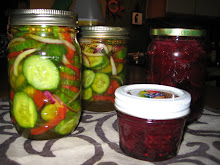
For the past few years, from the sidelines I've seen the guys chugging pickle juice from big jars of Vlasic pickles that they kept in coolers. Apparently, pickle juice helps with muscle cramping in athletes. I don't know if it's the vinegar, or a complex interaction of the ingredients, but I knew what I had to do. (info about the benefits of pickle juice in muscles here). So I made a big batch of kirby dills a few weeks before the tournament, and then packed them very carefully in a big plastic container, quadruple wrapped them, and put them in my checked luggage. I had a lot to think about before this trip--a lot of work stuff going on, things to do....but the safety and security of the pickles on the plane was really my biggest concern. They arrived safely with a very minimal amount of leakage and I brought them out during their second day of play. I think they liked them, though I regret not getting a picture of them digging in to the jar from the sidelines.

D's master's team made it to nationals in Sarasota, Florida this year, and I wanted to send him down with another batch of pickles. I bought about 24 persian cucumbers and socked them in ice water for two days, but then I found myself too busy to finish the picklemaking in time enough for me to be confident in their taste to send them down for the team. I cut them up, packed them in a big glass jar, and they stayed behind when D boarded the plane for Florida.


I wish I would have sent them because they were delicious, and they would have been fine after sitting for a few days in his hotel room. Oh well. Now we have a big old jar of pickles to eat ourselves!

Monday, June 15, 2009

Naturally Occurring Salad Greens

Last year, my friend took me to a swanky localvore joint just North of the meatpacking district in Manhattan called The Cook Shop (http://www.cookshopny.com) and we had a purslane, goat cheese, and blueberry salad. When the waiter put the plate in front of me, I recognized the greens: I had pulled up and disposed of every single one of them from my balcony garden in Brooklyn because I wrote them off as weeds. I vowed to bring them back and cultivate them this year, and it's working. Just the other day, I was able to harvest a handful and toss them in our salad. Delicious. Check out the nutrition benefits of purslane:

http://landscaping.about.com/cs/weedsdiseases/a/purslane.htm.

This experience definitely made me rethink an article that a friend wrote when we were in college called: Why is a Weed a Weed? I can't wait to have enough purslane on the porch to make my own blueberry and goat cheese salad. I'll be sure to post a photo.

Monday, June 1, 2009

Now that's camping!

camping

Blog-productivity has suffered this summer because D and I have been traveling so much. There's not much to say about this meal in terms of preparation, but it can't go unrecorded. We drove to Letchworth State Park a few weeks ago--about an 8-hour drive from Brooklyn. I was on a work trip and D came to meet me on the train. We drove from where I was staying about 3 hours to Letchworth, and then broke the trip up on the way back by stopping at my parents. Letchworth is known as the Grand Canyon of the East, and it was simply beautiful.

See: http://en.wikipedia.org/wiki/Letchworth_State_Park

On the way to the campground, we stopped at a supermarket and picked up a grass-fed beef steak, fresh ears of corn, asparagus, and heirloom tomatoes. When we got to the campsite, we set up the tent, made some margaritas, and chopped up some garlic and spices to marinate the steak in (with olive oil, salt, and pepper). A friend brought back some spices in a little decorative container from Zanzibar, and we just used those--saffron, sesame, cumin, and I think some sort of red pepper spice. We put the marinating steak in a plastic bag and tucked it away in the cooler and headed off for a hike.

When we returned, D sparked up the fire, set up the grill, and we laid it all out. One flip on the grill, and voila. Shortly before sundown, we were enjoying this lovely meal under the trees.

Monday, May 25, 2009

Roofkebabs

We spent a beautiful day in the park and decided to extend the day outdoors and barbeque on the roof for the first time this season. I had marinated some buffalo sirloin cubes earlier in the day so when we got home, we just soaked some bamboo skewers and arranged red pepper, tomato, pineapple chunks, and the sirloin cubes. We invited a friend over at the last minute, and she contributed some tomatillos and green peppers to the mix. We added some fresh local asparagus from the farmer's market and it was a feast.

Buffalo Roofkebabs

1 lb sirloin cubes (you can use beef, we used buffalo)
1 tbsp honey
1 tbsp tamari
1 tbsp olive oil
3 minced garlic cloves
3 tsp minced ginger
salt, pepper, drops of sriracha sauce
1 green pepper, cut into squarish pieces
1 cup cubed pineapple
1 red pepper, cut into large squarish pieces
3 tomatillos and one large red tomato, cut into chunks

Marinate the meat cubes in all of the ingredients mixed to the green pepper for the day (at least two hours). Arrange pieces of each ingredient on bamboo skewers and cook over grill until meat is seared and vegetable/fruit browned. Serve with some veggies or over rice, we served our kebabs with asparagus.

Sunday, May 24, 2009

When in doubt...

...or when creativity eludes, we opt for burgers. We always use local and/or grassfed beef or buffalo. Very little fat, and the taste is so much different (and better) than cheaper burgers. A pound of ground sirloin is around $6, and you get at least four meals of out it (you figure, 1/4 pound burgers, plus we add in a lot of stuff). The mixture is always a little different, but in general, this is how we make it. We had mini-burgers with broccoli, mushrooms, and green peppers on the side.

Simple Grass-Fed Burgers

1 lb ground sirloin
1 medium onion, chopped
3 cloves of garlic, diced
splash of soy sauce or tamari
squeeze of barbeque sauce
splash of steak sauce
squeeze of sriracha sauce
chopped green pepper
chopped mushrooms
breadcrumbs (optional)
salt, pepper, paprika

Form into burger-sized patties, cook in olive oil in a cast iron skillet. Serve with veggies and splashes of hot sauce (chipotle and green tobasco sauce pictured here).

Wednesday, May 20, 2009

Frozen Salmon Dilemma

We read an article recently about the dangers and disadvantages of farmed fish; afterward, we vowed to only eat wild-caught fish. Unfortunately, wild fish are expensive, and there's still the problem with overfishing.... What to do if you love fish? I'm not sure. I guess all things in moderation. I was at Trader Joe's a few weeks ago and saw Wild Alaskan Salmon on sale. I called D and asked if I should pick a few packages up, and I think he was distracted and work and said: "why not?" Well, frozen fish is simply just not something he does, having worked at a fish restaurant in the past, so he was not pleased with the purchase when he saw it: there was freezer burn, the color wasn't right, the texture wasn't right.... Back into the freezer went those fish, and I spent some time thinking about what to do with them. I ate one piece when he was out of town (it tasted fine to me), but then found this recipe from Eating Well (Winter 2004). I modified it a little bit, and the results were delicious.

Salmon Cakes with Creamy Yogurt-Dill Sauce

1 lb salmon
1 medium onion, finely chopped
3 minced garlic cloves
1.4 cup chopped fresh parsley
1 large egg, lightly beaten
2 tbsp teaspoons Dijon mustard
1 cup fresh whole-wheat or unseasoned breadcrumbs
1 teaspoon freshly ground pepper
olive oil
Creamy Dill Sauce (recipe follows)
1 lemon, cut into wedges

Preheat oven to 350 degrees and spread or spray a light coating of olive oil on a baking sheet. Set aside. Heat olive oil in a cast iron frying pan and saute the onions and garlic until the begin to brown. Remove them from the heat. Flake the salmon into small pieces with a fork. Mix in parsley, mustard, egg, and pepper. When the onions have cooled a bit, mix those in and add the breadcrumbs. Shape the mixture into 8 equally-sized patties. Heat some more olive oil in the pan over medium heat. Add 4 patties and cook until the undersides are golden, 2 to 3 minutes. Using a wide spatula, turn them over onto the prepared baking sheet. Repeat with the remaining patties. Bake the salmon cakes until golden on top and heated through, 15 to 20 minutes. Meanwhile, prepare Creamy Dill Sauce. Serve salmon cakes with sauce and lemon wedges. We served ours on a bed of wilted baby spinach, pan-fried tomatoes, and a half an ear of corn.

Creamy Yogurt-Dill Sauce

1 cup yogurt
2 tbsp mayonnaise (optional)
3 diced garlic cloves
3 tbsp chopped fresh dill
season with salt and pepper

Mix together, chill, and serve over salmon cakes.

Tuesday, May 19, 2009

Hmmm, seitan? No thanks.

D and I are flirting with the idea of a raw diet cleanse, but at the very least, cutting down on our meat consumption which has admittedly been really extravagant of late. I picked up some seitan (wheat gluten) at Fairway last week to use as a meat-substitute in my tagine. The flavor was okay, but that's because seitan really picks up the flavor of whatever you cook it in. I'm not crazy about the texture of seitan cubes, and D thinks that its too processed and doesn't fit into our ethos of cooking with whole, unadulterated foods. I suppose we could make it at home, but why? Seitan is a good protein source for those who have entirely given up meat (and apparently, a good substitute particularly for duck meat), and it's low in fat and calories, but there aren't really too many other benefits that make it worth doing this again. Check out some info on seitan here: http://en.wikipedia.org/wiki/Wheat_gluten_(food)

Here's the recipe I used, though. I made it up.

Ginger-Seitan Tagine

1 lb package of seitan
3 tbsp sliced ginger (I used matchsticks)
2 tbsp diced garlic
1 tbsp diced jalapeno
2 small onions, or one medium one (sauteed until browned)
1/2 cup garbanzo beans/chick peas
1/2 cup diced tomato
1/4 cup currants
1/4 cup olive oil
2 tbsp honey
1 cup vegetable broth
squeeze of lime juice
salt, pepper, paprika

Even though the seitan is pre-cooked, I decided to marinate it anyway in the olive oil, honey, lime juice, salt, pepper, paprika, ginger, garlic and jalapeno. It sat in that mix for a few hours, and then about an hour and a half before dinner, I combined the entire mix with the browned onion, chick peas, tomato, currants, and vegetable broth and placed in the base of the tagine. 400 degrees, an hour and a half later = yummy tagine. I served it over couscous cooked with parsley and scallion, seasoned with only salt and pepper.

Sunday, May 10, 2009

Spicy Tofu with Mushrooms and Spinach

We've been eating a lot less meat lately, and the tofu from the Korean place a block away is terrific: $1.50 for about 16 ounces of firm, white tofu. I don't know how they do it, but I like it. It's not overpackaged and it always seems fresh. This dish has become a staple because its so easy to prepare the night before and cook up quickly after a long day. I've been using spinach and mushrooms from the farmer's market.

Spicy Tofu with Mushrooms and Spinach

12 ounces firm tofu
2 tablespoons soy sauce
2 tablespoons rice vinegar
1 tablespoon honey
1 tablespoon cornstarch
2 teaspoons sesame oil
1/4 teaspoon crushed red pepper
8 ounces fresh mushrooms, chopped
3 tablespoons olive oil
1 tablespoon ginger, peeled and chopped
1 tablespoon garlic, chopped
6 ounces baby spinach, chopped

Slice the tofu into squares that are about 1/2 inch thick. Place the blocks of tofu in a clean kitchen towel and press down gently to try and soak up as much water as possible without breaking the tofu. Cut into 1/2 inch cubes. Whisk together the soy sauce, vinegar, honey, cornstarch, sesame oil, and crushed red pepper. Add the tofu, and gently combine. Cover and place in the fridge overnight. You can marinate for as little as an hour, or as long as 48 hours (I've never kept something marinating for longer than that, but you might try it). When you're ready to cook, take the tofu out and drain, reserving the leftover marinade in a separate blow. Set a wok or large iron skillet over high heat. Pour the 2 tablespoons of the oil in pan and heat until smoking hot. Add the tofu, stirring gently and occasionally until the tofu is browned, about 2 minutes. Remove the tofu and place in a separate bowl. Pour in the rest of the oil, and then add the mushrooms, ginger, and garlic. Stir and cook for about a minute. Add the spinach and the marinade. Cook until the spinach has wilted, and then add the tofu back in. I serve this over soba noodles, brown rice, or if I'm feeling decadent, jasmine rice. Sometimes we even eat it all by itself. This recipe makes enough for two dinners and two lunches for the next day.

Sunday, May 3, 2009

Venison Virgin

There's something about looking an animal in the eye before taking its life for food that really appeals to me. Michael Pollan wrote about a meal that he cooked for a group of friends that entailed not only foraging for wild mushrooms, but also stalking and killing a wild boar. What a terrific essay. Pollan explored the conflicting feelings he had as a hunter of excitement, disgust, guilt, and satisfaction. I'm pretty sure the essay was included in his larger work, The Omnivore's Dilemma, but it also appeared in the New York Times (http://www.michaelpollan.com/article.php?id=74). I don't know if I'll ever be a hunter, but D has a friend who is, and this friend hunts deer with a bow and arrow for meat that lasts him through the year. He generously gave us a pound of venison tender loin. Neither D nor I have ever had venison before, so we decided to prepare it as a tagine with north African spices. I rooted around on the internet and adapted this recipe from the a website in the UK: Seriously Good Venison: http://seriouslygoodvenison.co.uk/tagine_of_venison_with_apricot.php

Venison Tagine with Apricots

1 lb cubed venison
1 large onion, chopped
2 tbsp olive oil
1 tsp cumin
1 tsp ground ginger
1 teasp turmeric
½ tsp ground coriander seed
½ tsp cinnamon
a few threads of saffron
½ tsp ground black pepper
1 bell pepper, de-seeded & cut into chunks
½ head of garlic cloves, peeled & halved
12 dried apricots--the French ones are better than the Turkish ones for this dish
Few slices of chopped salted lime
Handful of fresh cilantro, chopped
1 cup whole wheat couscous
1 tbsp oil
2 cups vegetable stock
1 1/4 cup water

Heat the oil an a pan and toss the onion, garlic and meat in it till a little brown. Add the spices and fry them too for a minute. Add the bell pepper. Place the meat, onion, and vegetable mixture into the base of a tagine and add apricots, cut in half. Cover with 1 cup of vegetable stock, and pop in the oven at 400 degrees. Let stew for about an hour. Add preserved lime slices 20 minutes before serving. To cook the couscous, stir olive oil into one cup of couscous in a medium bowl and season with salt and pepper. Boil 1 1/4 cup of water and pour over the couscous. Cover and let stand for 15 minutes, or until the couscous has absorbed all of the water. Stir in fresh cilantro and fluff with a fork. Spoon the tagine over the couscous and enjoy!

Saturday, May 2, 2009

From leftover chicken to spicy Asian-style soup

We had friends over for dinner one night and cooked a whole chicken that had been marinated in lemon and parsley. There was quite a bit of meat left on the bird when we were through (four hearty meals and two lunches later: $12, organic, free-range, definitely worth it), and I didn't want to waste the tastiness of the marinade, so I threw the chicken in a pot and boiled it into stock with leftover meat. I didn't want to make the same old chicken soup, so I scrounged around online for something different. I had almost all of the ingredients on hand, but had never made anything like it before. I love anything with peanut butter, but add these flavors and I'm in heaven. Our friend from South Africa brought back a red pepper paste: Hot & Sweet Mazavaroo. I want to use it, but I rarely find the right occasion. The mazavaroo worked quite well in this soup as a substitute for chopped red chili pepper.

Malaysian Lemon Peanut Chicken Soup

1 3 lb chicken (you can use leftover carcass)
1/2 tsp turmeric
2 tbsp red pepper chili paste (or if you have mazavaroo on hand...)
2 cans of coconut milk
2 chopped carrots
1/2 cup chopped mushrooms
1 diced red pepper
1/2 cup sliced cabbage
3 tbsp ginger, in slivers
2 tbsp chopped garlic
2 cups of water
2 tbsp lemon juice
4 tbsp peanut butter
3 scallions; sliced
1 tbsp fresh coriander/cilantro; chopped
Salt and freshly ground pepper

Make stock out of a leftover chicken carcass: this is always going to make better soup than cubed or canned stock. Sautee ginger, garlic, red pepper, mushrooms, carrots, and cabbage in olive oil sprinkled with turmeric. Add the tender, spiced vegetables to the chicken stock, along with the lemon juice, peanut butter, and coconut milk. Add red pepper chili paste, mazavaroo, or any other type of spicy seasoning to your liking--remember, it will get hotter as it cooks and sets. When the soup has simmered for at least 40 minutes, you can serve hot with scallions and fresh cilantro. Season with salt and pepper to taste.

Creamy Turkish Treat

A friend in London brought a lovely semolina pudding-type dish to the bar mitzvah a few weeks ago. He's the only one who brought homemade food, so of course I was charmed. But it was also super delicious. He hasn't yet shared the recipe with me, but I found this one online, and made it soon after my return. His dish was Turkish, but semolina-type desserts are common in many areas of the world. Apparently, its a favorite among Hare Krishnas. That's cool.

Suji Halva

2 3/4 cups water
1 1/4 cups sugar
1/2 teaspoon saffron strands, soaked in 1 tablespoon boiling hot milk
140 g unsalted butter
1 1/4 cups semolina
1/3 cup sliced almonds
1 teaspoon ground cardamom
1/3 cup currants

Combine the water, sugar and the soaked saffron in a saucepan. Place over moderate heat, stirring to dissolve the sugar. Bring to a boil, then reduce the heat to very low and cover with a tight-fitting lid. Melt the butter in another saucepan over low heat, stirring occasionally. Add the semolina, and slowly and rhythmically. Stir-fry the grains for about 20 minutes, or until they darken to a tan colour and become aromatic. Add the flaked almonds to the grains towards the end of the toasting process. Raise the heat under the syrup, add the cardamom and the raisins and bring it to a rolling boil. Raise the heat under the semolina for 1 minute, stirring continuously. Remove the saucepan of semolina from the heat, and slowly pour the hot syrup into the semolina, stirring steadily. The grains may at first splutter, but will quickly cease as the liquid is absorbed.

Return the halava to the stove and stir steadily over very low heat until the grains fully absorb the liquid, start to form into a pudding-like consistency, and pull away from the sides of the pan. Place a tight-fitting lid on the saucepan and cook over the lowest possible heat for 5 minutes. Removed the covered saucepan from the heat and allow the halava to steam for an additional 5 minutes. Serve hot.

I served ours with a bowl of labne, which complemented the custard well.

Friday, May 1, 2009

Sustainably harvested fish & chips

Visiting the local chipper is one of my top three favorite things to do when I'm in London. My friends recently moved to a new area, so there was a new chipper to try: The Sea Cow. The old chipper was wonderful: a dingy little place where the fish was dripping with grease and they still wrapped everything in newspaper. I kind of missed it, and in fact, after visiting Sea Cow, one of my friends made a vow with me to seek out a new, dingy chipper for my next visit.

The Sea Cow fit in nicely with my local and sustainably produced food agenda; the ambiance and the tastiness of the food made the trip perfect. Unfortunately, I didn't snatch a "guide to the fish" sheet that was available with the menu, but the menu itself states: "All of our fish is sourced and delivered daily from the coast or Billingsgate Fish Market. We try and take advantage of the seasonality so our menu may change from time to time."

M and I chose the locally-harvested cod and chips--the most traditional of the fish and chips selections. P's mum ordered the Plaice and chips, and P ordered the grilled organic salmon. Everything was delicious. They had a good wine selection (with suggestions about how to pair the wine with the fish) as well. This place is a winner. I would definitely return.


A Welcoming Mezze

Advice for people hosting overseas houseguests: the best way to welcome a travel-weary visitor is with a mezze plate like this one. I recently took an overnight flight to London, and when I arrived late-morning, my friend put this dish in front of me. Delicious whole-grain pita, grape leaves, grain salad, roasted peppers, and the best homemade babaganoush I've ever tasted. Mmmmm. Mezze is such an awesome concept: so many different cultures enjoy some version of the mezze, and there are so many different kinds of dishes that you can include: olives, yoghurt, roasted cauliflower.... (see: http://en.wikipedia.org/wiki/Meze) Mezze is served as an appetizer to share at some restaurants.

The baba I had could be made with the following recipe:

Garlic-Dill Babaganoush

1 eggplant
1 red bell pepper
2 cloves garlic
handful of dill
3 tbsp non-fat plain yoghurt
2 tbsp tahini (optional--makes it thicker)
olive oil
lemon juice
salt and pepper

Roast the eggplant and garlic until mushy. Dice red bell pepper. Mix together with the fresh chopped dill, 1 tbsp (or so) of olive oil, yoghurt, a few squeezes of lemon juice, and season with salt and pepper. Simple. Elegant. Healthy.

Tuesday, April 14, 2009

Easter Bunny

Nothing says Easter better than a bunny. When our friends asked us to prepare dessert for the dinner party we had this weekend, I knew this is what I wanted to make. I used the cupcake recipe from my birthday (see earlier post), used toasted coconut for the fur and jelly belly jelly beans for the eyes, and placed dyed green coconut underneath so it looked like the bunny was sitting on grass. I found instructions for how to make a bunny-shaped cake from good old Betty Crocker:

http://www.bettycrocker.com/recipes/recipe.aspx?recipeid=36248

This treat surprised and delighted everyone. We had a more sophisticated dessert that D. made (a lovely, simple apple tart), but after a few glasses of wine post-dinner, people started to dig into the bunny.

Sunday, April 12, 2009

Persephone's Ruin

Persephone is a mythological figure from ancient Greece who was seduced by her uncle, Hades, god of the underworld. Hades lured Persephone to him with a pomegranate. Zeus punished Persephone by banishing her to the underworld for six months a year--one month for each of the six seeds she ate. The remainder of the year she could spend with her mother, Demeter, the greek Mother Earth. For six months of every year, Demeter mourns the loss of her daughter; she celebrates during the other six. This is how the ancient Greeks explain the changing of the seasons, and this is how The Love Bite, my favorite recipe treasure trove, describes the origin of the dish Persephone's Ruin. (See http://thelovebite.com/recipes/the_main_event/persephones_ruin)

I've been dying to try this recipe, so when friends invited us up to their country place in Pennsylvania for Easter, I knew that this is what I wanted to make. I had to adapt the recipe a bit because I couldn't get the right kind of lamb, nor could I get pomegranates. While this recipe reads and tastes like a Spring recipe, it clearly isn't because pomegranates are not in season in April in this area.

For all of the many dishes I've served to all of my friends, I received the most--and the best--compliments for this one. One of our friends who is a chef himself said that this was the best dish he'd ever tasted, and that it reminded him of something his mother once said about another dish: "Every bite says I love you." Well worth the effort for that kind of praise.

Persephone's Ruin
Spring in New York version

1 package of phyllo dough
1 stick of butter
1 lb ground lamb
1 onion
3 cloves of garlic
smidgen of cumin powder
8 oz goat cheese
1 egg yolk
salt and pepper
6 golden beets
pomegranite molasses
olive oil

The day before, place the beets in aluminum foil, drizzle them with olive oil, and season with a little bit of salt and pepper. Bake them at 350 until tender (about 1 hour). Dice the onion and garlic, and saute in olive oil until translucent. Add the ground lamb, season with a bit of salt and pepper and some ground cumin. Cook until just beginning to brown. Place in a bowl with 3 tbsp pomegranate molasses, cover, and put in the fridge.

When the beets are done roasting (you can tell when they are tender enough to poke through with a fork), take them out, let them cool down a bit until you can handle them, and then, running them under cold water, peel the skins off with your hands. Cut the beets into rounds and refrigerate.

The next day, brush a sheet of phyllo pastry with melted butter, place another sheet on top, and repeat until you have 8 sheets stacked. Place the phyllo stack in a buttered loaf pan and press the pastry to sides of pan. Brush the inside with butter. Pre-heat the oven to 400. Mix 8 ounces of goat cheese with 1 egg yolk and beat lightly. Reserve 1/4 of the goat cheese, and spread the rest onto the phyllo pastry. Line the goat cheese with the golden beet rounds, then place the ground lamb on top. Spoon the reserved goat cheese in small clumps on top of the lamb and fold the phyllo dough over the entire mixture. Brush with butter and pop it in the oven. It should cook for about an hour, maybe more, until the phyllo dough has turned a golden brown color.

I served this as a good-sized appetizer to 10 people; it could probably be a nice dinner for 4-6 people, depending on your sides and how much you eat. I also served it with a Cucumber Mint Yogurt Sauce on the side, as the original recipe called for chopped mint on top of an open phyllo dish.

Cucumber Mint Yogurt Sauce

1 cup lowfat plain yogurt (labne or Greek yogurt would be the best)
2 chopped scallions
2 finely minced garlic cloves
1 peeled and finely grated cucumber
salt & pepper

Mix all of the ingredients together and season to taste with salt and pepper.

Thursday, April 9, 2009

Not-so-Seder

My favorite local meat vendor at the green market in Prospect Park, the Flying Pig farm (http://www.flyingpigsfarm.com/) handed out a recipe for Cumin-Citrus Pork Cutlets a few weeks ago. I've made the dish twice and it was delicious, even better for leftovers the second day. The citrus part certainly isn't localvore, unfortunately, but I think exceptions always need to be made for lemon.

Yesterday when I defrosted the cutlets, I didn't realize until later that day that it was the beginning of Passover. I have to admit, it felt a bit like a heresy to have pork on the first evening of Passover, despite the fact that I'm not Jewish. Next year, I promise something more seder-like.

Here's the recipe, which the farm found in an August 2001 issue of Bon Appetit. I adapted it only slightly.

Cumin Dusted Pork Cutlets with Citrus Pan Sauce

4 tbsp flour
4 tsp ground cumin
1 tsp black pepper
1/4 tsp cayenne or hot paprika
1 tsp salt

1 lb pork cutlets or pork strips
olive oil
4 minced garlic cloves
1/2 cup orange juice
6 tbsp fresh lemon juice (2-3 lemons)

Orange wedges

Combine on a plate: 4 tablespoons flour, 4 teaspoons ground cumin, 1 teaspoon salt, 1 teaspoon black pepper, ¼ teaspoon cayenne pepper. Dredge each piece of 1 pound of pork cutlets in the flour mixture. Heat olive oil in large cast iron pan over high heat. Add pork and sauté for about 3 minutes per side, until just barely cooked through. Don’t overcook! Transfer pork to serving plate, cover with foil to keep warm. Add a bit more olive oil to the pan. Add 3 or 4 minced garlic cloves and sauté until golden brown. Add ½ cup good quality orange juice, 6 tablespoons fresh lemon juice (from 2 or 3 lemons), some citrus flesh (chopped up oranges or lemons from the lemon you squeezed), and a pinch of salt. Boil until slightly thickened. Pour sauce over pork and serve.

I've served this dish with any combination of daal, black beans, quinoa, rice, and quinoa, but always garnished with the orange wedges. Dumping all of the leftovers on some greens makes an amazing lunch the next day.